Helpful Tips
Storage
- Fridge: Store leftovers in an airtight container for up to 4 days.
- Freezer: Pull-apart lamb freezes well. Store in portions in airtight bags or containers for up to 3 months.
- Reheating: Reheat in a covered baking dish at 160°C with a splash of stock or water to keep it moist, or microwave covered for 2–3 minutes until warmed through.
- The potato base reheats best in the oven or a dry frying pan to get some crispiness back.
Substitutions
- Lamb cut: Bone-in lamb shoulder works just as well and is often cheaper — same method, same timing.
- Red wine: Replace with extra chicken stock and 1 tbsp of balsamic vinegar if you prefer to cook without alcohol.
- Potatoes: Desiree and sebago both hold their shape well. Avoid waxy salad potatoes — they won’t caramelise the same way.
- Rosemary: Fresh thyme works as a substitute if rosemary isn’t available.
Serving Suggestions
This is a complete meal as it is — the potato base acts as your side. To round it out, add a simple green salad dressed with lemon and olive oil, or a bowl of Greek yoghurt on the side to cut through the richness. If you want extra vegetables, roasted broccolini or steamed green beans alongside keep it simple.
Ingredients
For the lamb:
- 2–2.2kg bone-in leg of lamb
- 6 garlic cloves, halved lengthways
- 6 small fresh rosemary sprigs
- 3 tbsp Dijon mustard
- 1 tsp smoked paprika
- 1 tsp ground cumin
- 1 tsp dried oregano
- 1 tsp fine salt
- ½ tsp black pepper
- 1 tbsp olive oil
For the base:
- 1kg potatoes, sliced 2–3mm on a mandoline
- 2 brown onions, sliced 2–3mm on a mandoline
- 3 large carrots, cut into chunky wedges
- 1 tbsp olive oil
- Salt and pepper to season
For the braising liquid:
- 250ml chicken stock
- 150ml red wine
- Juice of 1 lemon
- 4–5 garlic cloves, left whole
Nutritional Information
( per serving, based on 6 )
| Nutrient | Amount |
|---|---|
| Calories | 580 kcal |
| Protein | 52 g |
| Carbohydrates | 28 g |
| Fat | 26 g |
| Fibre | 4 g |
Nutritional information is approximate and provided as a general reference only. Actual values may vary. This is not a substitute for professional dietary advice.
Directions
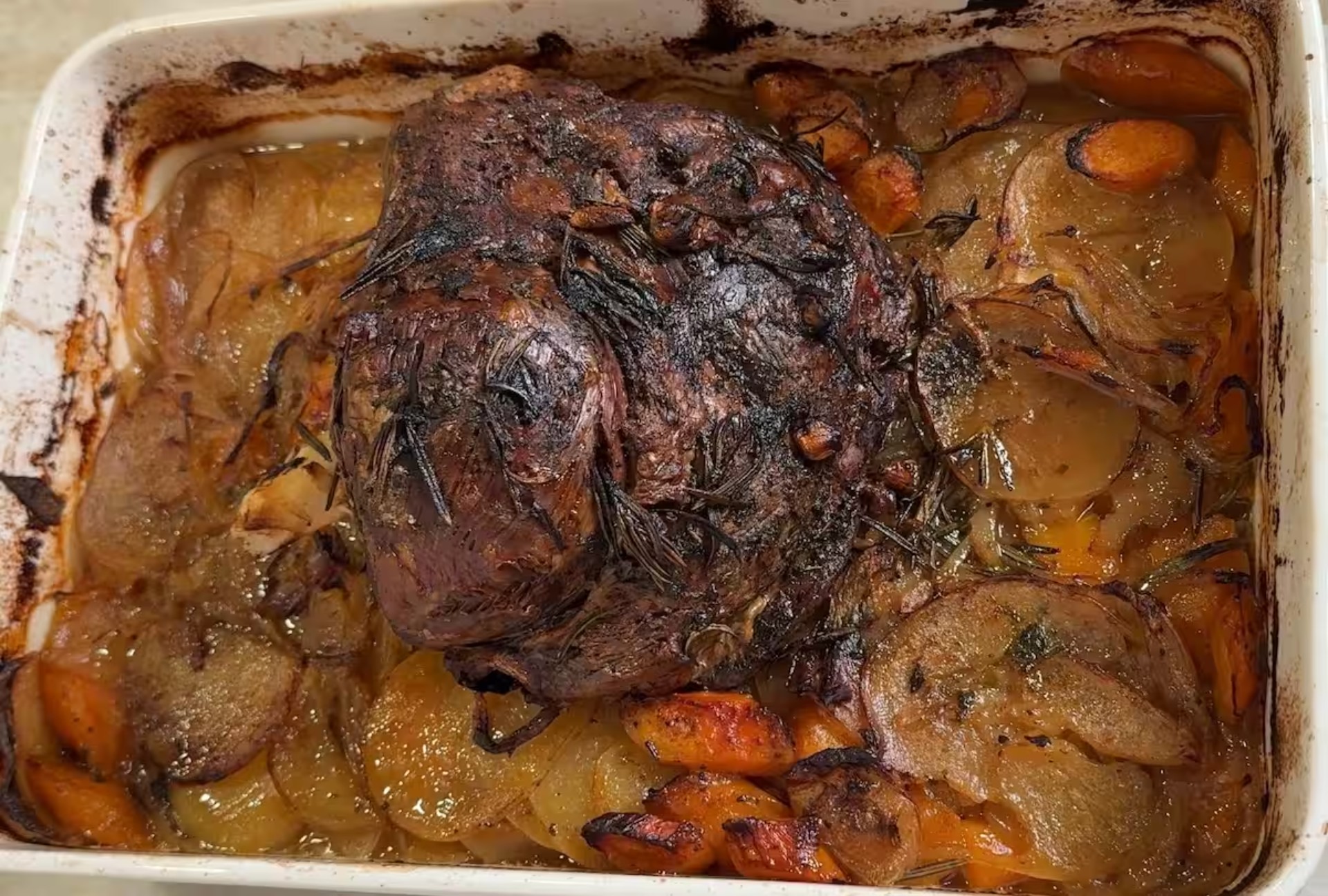
- Preheat your oven to 160°C fan-forced. Take the lamb out of the fridge 30 minutes before cooking so it comes closer to room temperature.
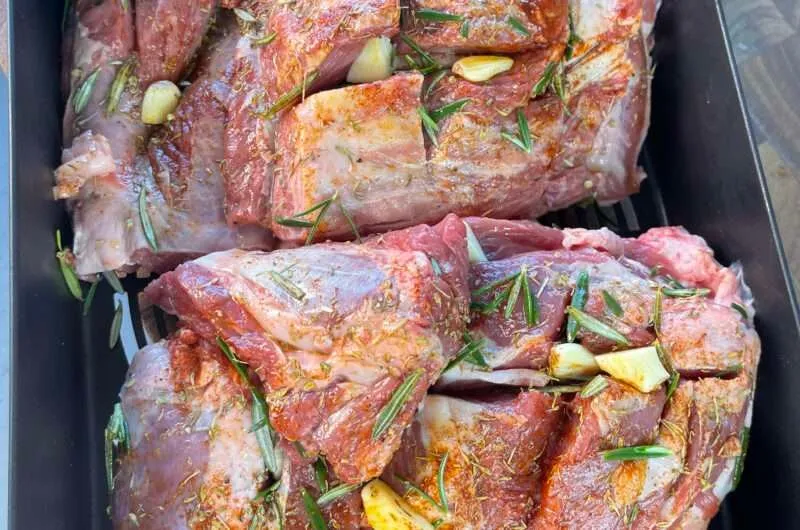
- Using a small sharp knife, make 12 deep incisions across the lamb leg. Push a halved garlic clove and a small rosemary sprig into each incision.
- In a small bowl, mix together the Dijon mustard, smoked paprika, cumin, dried oregano, salt, pepper and olive oil into a paste. Rub the paste all over the lamb, covering it evenly on all sides.
- Layer the sliced potatoes and onions across the base of a large, deep roasting tray. Scatter the carrot wedges through the gaps. Drizzle with 1 tbsp olive oil and season with salt and pepper.
- Pour the chicken stock, red wine and lemon juice into the tray. Tuck the whole garlic cloves among the vegetables.
- Place the lamb leg on top of the vegetables. Cover the tray tightly with two layers of foil, sealing the edges well.
- Roast covered at 160°C for 1 hour. Remove from the oven, carefully lift the foil, and baste the lamb with the pan juices using a spoon or brush. Re-seal the foil and return to the oven for a further 1 hour.
- After 2 hours total, remove the foil. Baste the lamb again. Increase the oven temperature to 200°C fan-forced.
- Roast uncovered for 30–40 minutes, until the crust is golden and caramelised and the potatoes at the base are crispy and coloured from the reduced pan juices. The lamb should be pull-apart tender — test it with two forks; it should yield easily with no resistance.
- Remove from the oven and rest the lamb, loosely covered with foil, for 20 minutes before carving. This lets the juices redistribute and makes slicing much easier.
- Serve the lamb directly from the tray with the caramelised potato base and a spoonful of pan juices over everything.
Watch How to Make It
See more Bakes & Trays Recipes


Join for Exclusive Resources
- Meal plans
- Premium recipes
- Weekly email from me