Helpful Tips
Storage
- Store leftover lamb and potatoes in separate airtight containers in the fridge for up to 3 days.
- The pan juices can be stored in a jar or container in the fridge for 3–4 days (just skim off any fat before reheating).
- For longer storage, freeze the lamb (shredded or sliced) in portions for up to 2 months. Thaw overnight in the fridge and reheat gently in a covered pan or ovenproof dish with a splash of stock or water to keep it moist.
- Potatoes are best eaten fresh, but will keep in the fridge for 2 days and can be crisped up again in a hot oven or air fryer.
Substitutions
- If you can’t get a bone-in leg, a boneless leg or shoulder of lamb works well. Adjust cooking time slightly if using a smaller cut.
- Fresh rosemary is classic, but thyme or oregano can also be used. You can mix and match depending on what you have on hand.
- White wine adds depth, but you can replace it with extra chicken stock or vegetable stock.
Serving Suggestions
Serve it with my Greek Orzo Salad with Honey Dijon Dressing and focaccia.
Ingredients
- 1 bone-in leg of lamb (2-2.5kg)
- 2 sprigs fresh rosemary
- 8 garlic cloves, peeled and halved lengthways
- 2 tbsp extra virgin olive oil
- Salt and freshly cracked black pepper, to taste
- 2 cups chicken stock (plus extra if needed)
- 1 cup white wine (optional, or just use more stock)
- Juice of 1 lemon
- 1 tbsp dried oregano
- 4 large white potatoes, peeled and cut into big wedges
To serve:
Greek Orzo Salad with Honey Dijon Dressing
Directions
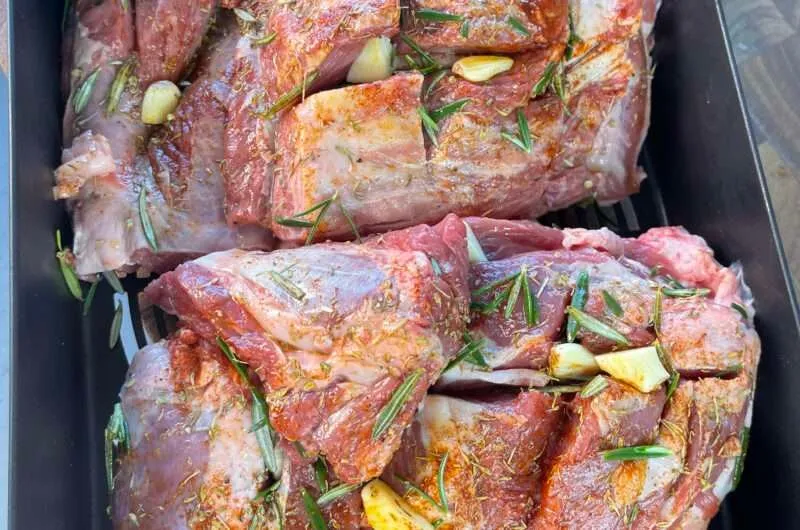
- Pat the leg of lamb dry with paper towel. Using a small knife, make about 16 small cuts (around 1 inch deep) all over the fat side of the lamb. Stuff each cut with a half garlic clove and a little bit of rosemary.
- Drizzle olive oil all over the lamb and rub it in well. Then season generously with salt and freshly cracked black pepper on all sides.
- Preheat to 180°C (fan-forced).
- In a bowl, mix together the chicken stock, white wine (if using), lemon juice, and oregano.
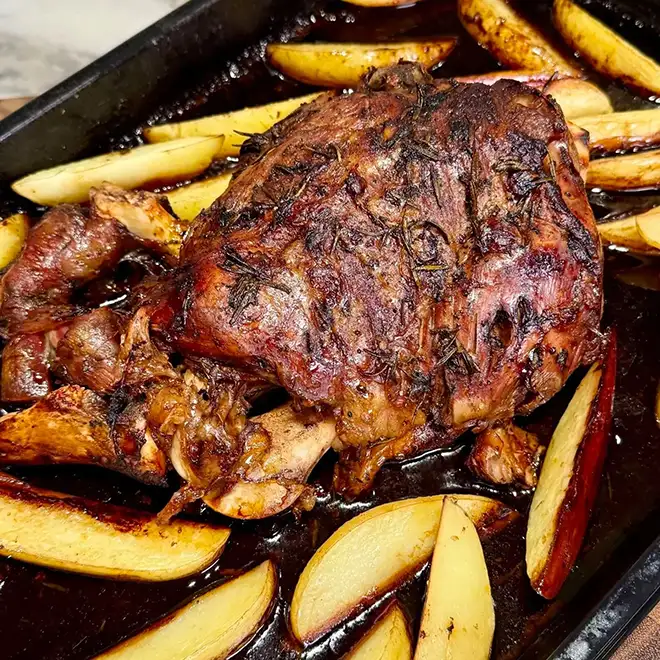
- Place the lamb in a large roasting tray. Pour the liquid mix around the lamb (not on top so you don’t wash off the seasoning). Cover the tray tightly with foil and place it in the oven. Roast for about 3.5 hours, or until the lamb is super tender and falls apart with a fork. If after 3.5 hours it’s still a bit firm, reseal with foil and keep cooking, checking every 30 minutes.
- Take off the foil, baste the lamb with the juices in the tray. Toss the potato wedges in the tray with the cooking liquid so they’re coated.
- Turn the oven up to 220°C (fan-forced) and roast uncovered for another 30–35 minutes, until the lamb is beautifully browned and the potatoes are soft and golden. If the liquid reduces too much during this time, add a splash more stock. If the lamb or potatoes start to get too dark, cover loosely with foil or baking paper.
- Transfer the lamb and potatoes to a serving platter.
- Carefully pour the remaining liquid from the bottom of the tray into a heatproof jug or glass measuring cup (this liquid is full of flavour!).
- Let the liquid sit for about 5 minutes. The fat will naturally rise to the top. Use a spoon to skim off the layer of fat, so you’re left with the rich juices underneath.
- Serve the lamb with the potatoes, and pour the pan juices over the top or serve them in a jug on the side.
- Let the lamb rest for 10 minutes before carving to help the juices settle and keep it tender.
Watch How to Make It


Join for Exclusive Resources
- Meal plans
- Premium recipes
- Weekly email from me